
The Attention SCORE
(Social Choreography for Observation, Reflection, and Enaction)

Much of our programming at SoRA (including our Seminars, Attention Labs, Sidewalk Studies, and Art Programs) revolves around the Attention SCORE. We use SCORES to create the conditions for collective attention: the increasingly rare moments of goodness that can happen when all of us give our senses to the same object at the same time in the same place.
When people want to play music together, they often use a “musical score,” which lays out the notes, the time signature, and other elements that help multiple musicians coordinate their collaboration. A musical score helps people play music together. An “Attention SCORE” is similar. It lays out a structure that lets a group of people use their attention in a coordinated and self-conscious way. An Attention SCORE lets people play their attention, together.
What is an Attention SCORE, exactly? We use this term for any formal script or protocol or exercise that proposes to synchronize the attentional experience of two or more people across a defined period of time. In general, such an occasion features three basic “movements”: first, people actually “do” the SCORE itself (meaning, they bracket the required time, initiate the attentional exercise in question, follow its phases or steps, and then bring it to a close); then they take some additional time, usually individually, to reflect back on what happened across the interval of active, “scripted” attention (often by jotting some notes); then, finally, the participants talk through, together, what they all just did together (and this can be more formal, or less; more serious, or more convivial — depending on the mood and the context). So it’s: 1) do the SCORE, 2) think about it, and 3) talk about it. That’s all there is to it.
SCOREs have a deep history across multiple traditions, from the Fluxus art collective to liturgical religious practices to forms of experiential education. We take all of those traditions seriously! We believe that they have so much to teach us – especially when understood as technologies of collective attention.
Here a few examples of the kinds of SCOREs we have developed:
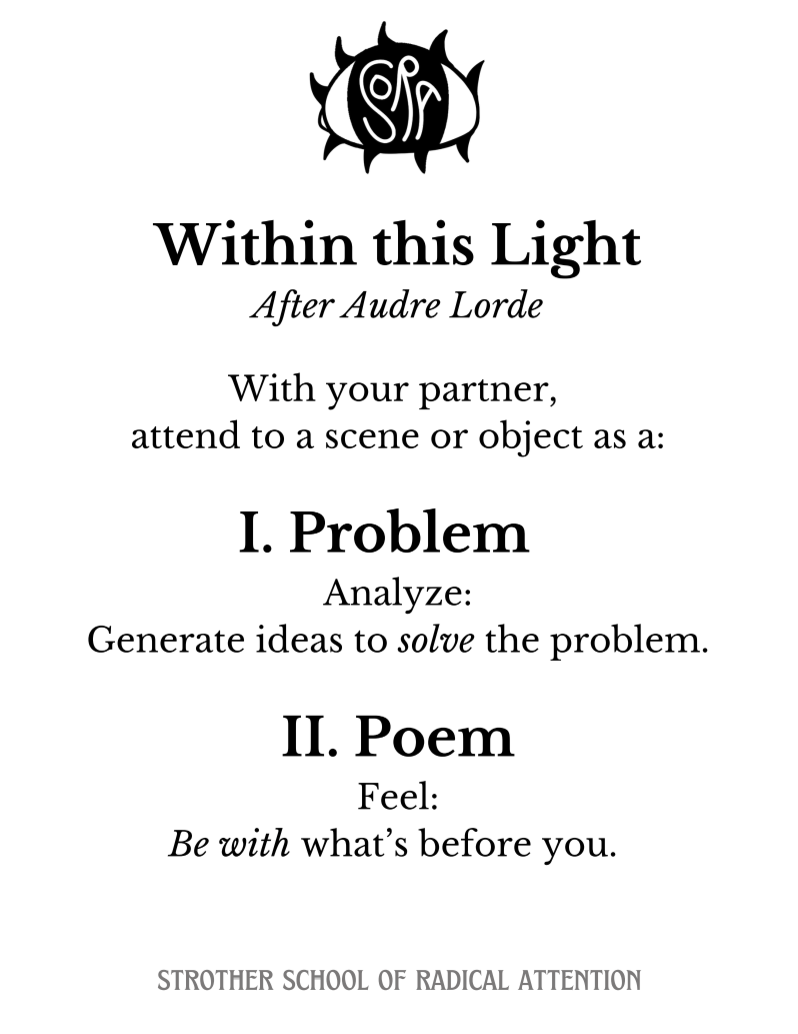
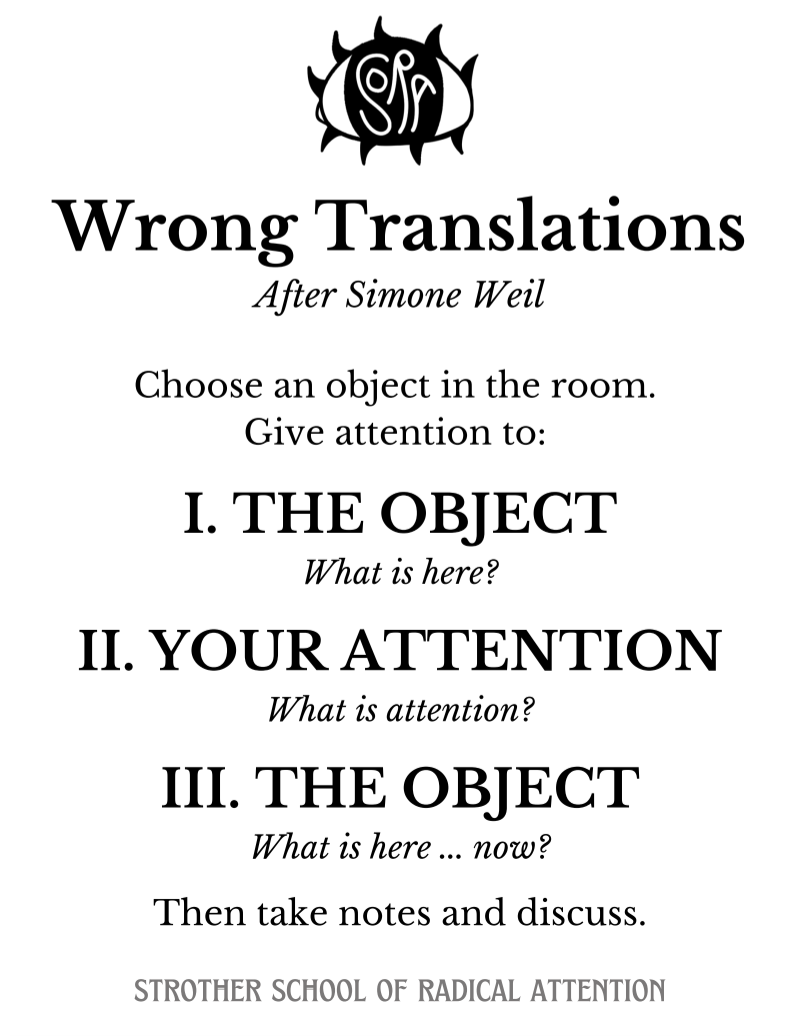
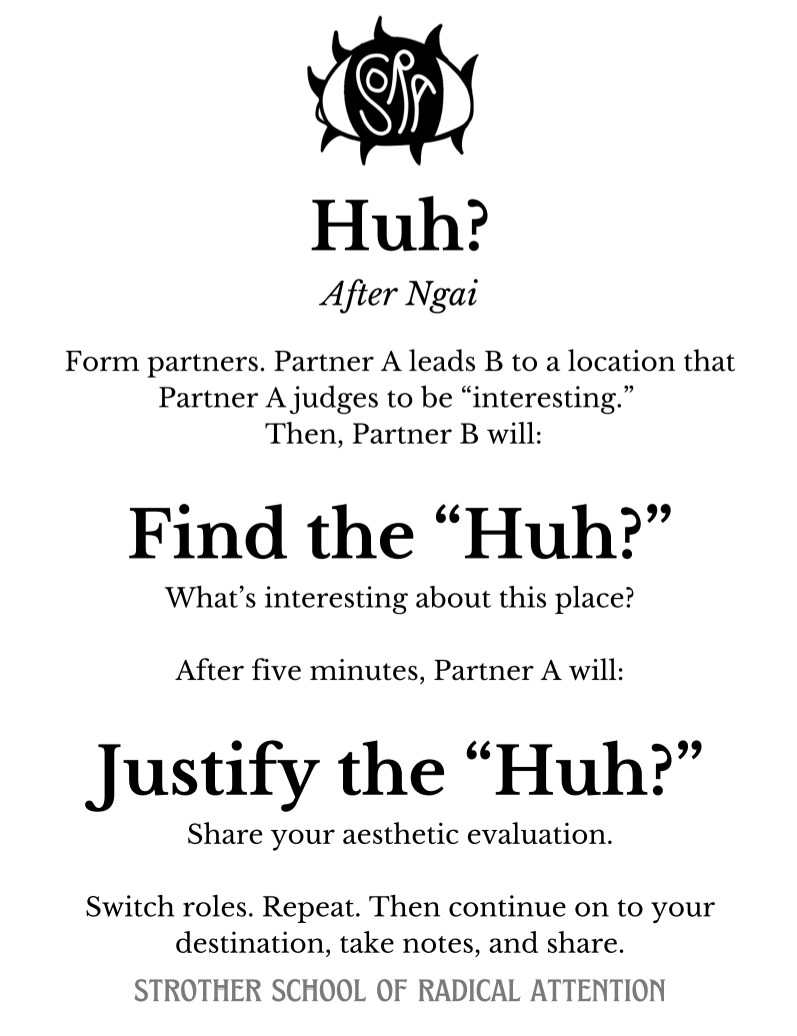
To learn more about SCOREs and how we use them, check out this expanded introduction.